BASE · Telco · B2C · 2023–2024 · 9 months
BASE Goes Multi-Product:
Internet & TV in 9 Months
BASE was mobile-only — no product pages, no user trust as a provider, and a business model no telco in Belgium had tried before. I led design end-to-end in 9 months. The new multi-product experience supported a launch that reached 3× the planned sales volume within two months.
Sole UX Designer. Owned full process from discovery to launch — research, strategy, all design surfaces, stakeholder workshops, usability testing, and post-launch iteration.
Figma · Adobe Analytics · ContentSquare · Optimal Workshop · Maze · ContextWeb
BASE was a single-product company. Every system, every page, every user mental model was built around mobile. Adding Internet and TV wasn't a feature update — it was a business transformation.
The challenge had three layers:
Product & scale
BASE went from a single-product to a three-product company overnight — but the site was built entirely around one product. Every part of it now had to absorb the impact of two new products. My focus: dedicated landing pages for each product, a bundle configurator built from scratch with its own discount logic, and FAQ & support content that didn't exist before.
Breaking the bundle model
BASE was the first telco in Belgium to kill the forced-bundle model in favor of 1P+1P+1P — separate products users combine themselves. This wasn't a pricing tweak: it required deep user research to understand how the audience reacts to unbundled pricing and how to actually sell it. That research is what shaped the multi-tier discount model we shipped.
Technical constraints
As part of Telenet Group, we had to reuse a large share of existing components and checkout flows from Telenet. That put real limits on both the design and the business solutions we could build.
Turn a single-product mobile operator into a multi-product provider — from zero, in 9 months, for up to 10 million users in Belgium.
Tree test — navigation structure
Tested 3 navigation models with existing BASE customers before any design work.
→ Users expected "Combine" as a top-level standalone entry, not nested under Mobile. This reshaped the entire nav structure — counterintuitive to stakeholders but validated by data.
Qualitative interviews — 3 waves
Before design, mid-process, and post-launch with BASE customers and non-customers.
→ Trust was the primary barrier. "I didn't know BASE did internet." Shifted tone of voice on all three landing pages from product-focused to credibility-first.
Usability testing — configurator format
One-page vs stepper — tested with real users before building.
→ Stepper felt like commitment. Users hesitated to go back. One-page won — users could see and adjust everything simultaneously.
Usability testing — promo comprehension
Full configurator flow with external research team — promo logic, login push, basket integration.
→ Users didn't understand when the discount applied. Redesigned pricing summary to show savings at every step, not just checkout.
A/B testing + ContentSquare post-launch
Navigation variants, landing page components, heatmaps on live product.
→ Tree-test navigation won. ContentSquare identified friction points that informed post-launch iterations.
Why a configurator instead of a forced bundle?
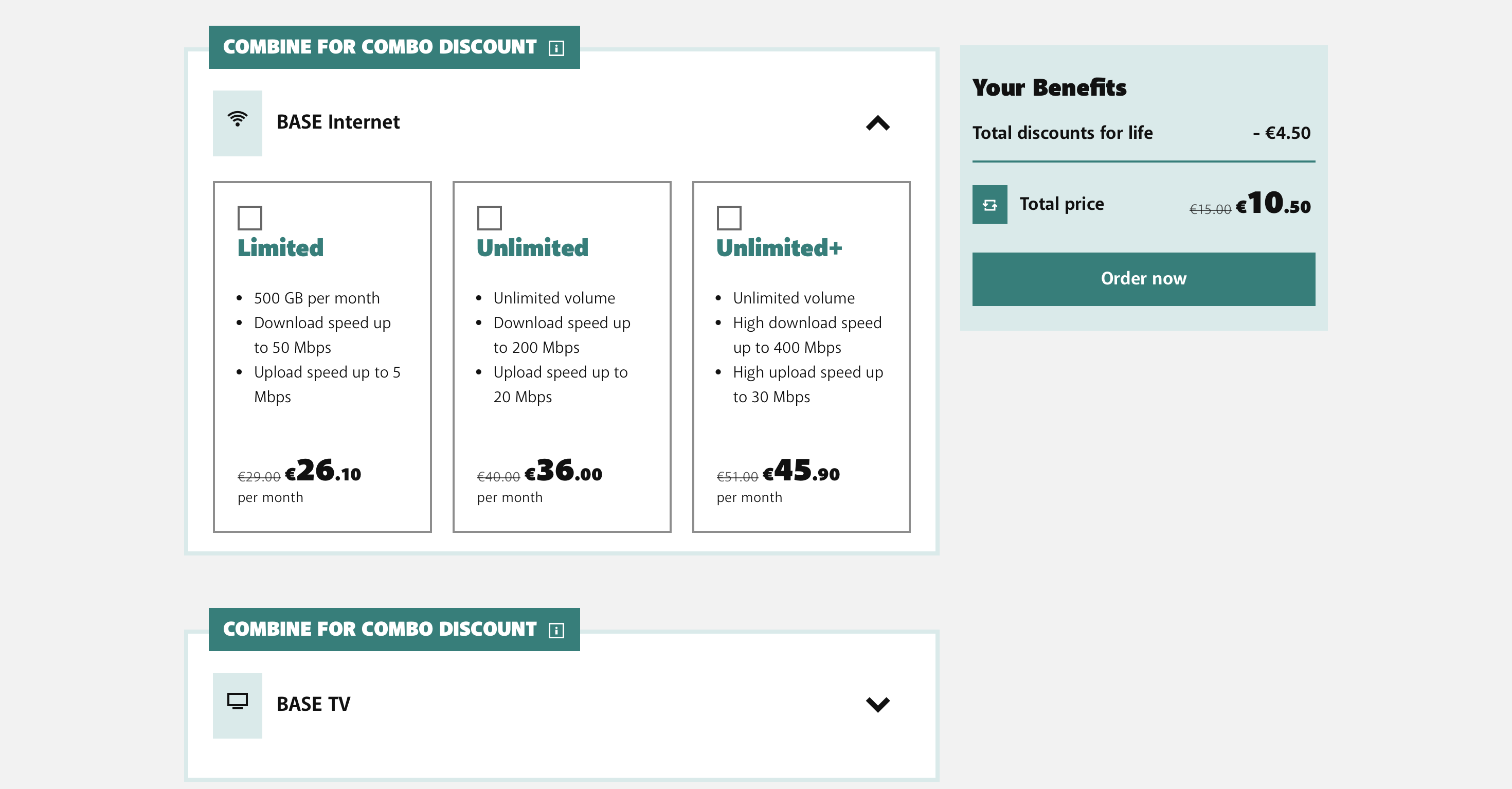
Research showed forced bundles no longer work — users want to self-select and control what they buy. The configurator was designed around that insight: choose any standalone product, and if you pick 2 or more, you automatically get 10% discount for life on each. The goal wasn't to push bundles — it was to make individual choice transparent and reward combination naturally. This also opened a clear upsell path: users who came for one product could see what adding another would cost them in real time.
Why one page, not a stepper — and why 5 states?
Research confirmed bundles don't work well when imposed. People want transparency and control. The configurator lives on one page precisely for this reason — new customers see exactly how the discount works and what comes next; existing customers see how their current products affect future discounts. The 5 states let us show each user only what's relevant to them, making the pricing logic clear rather than hidden.
How do you design for a brand users don't yet trust as a provider?
Every design decision was informed by one core research finding: users didn't believe BASE could be a reliable internet or TV provider. This shaped the tone of voice on landing pages, the order of information in the configurator, and the credibility signals throughout the flow. We designed trust before selling product — and validated this approach with qualitative interviews at three stages of the project.
Design — selected screens
01 — Landing pages for Internet & TV
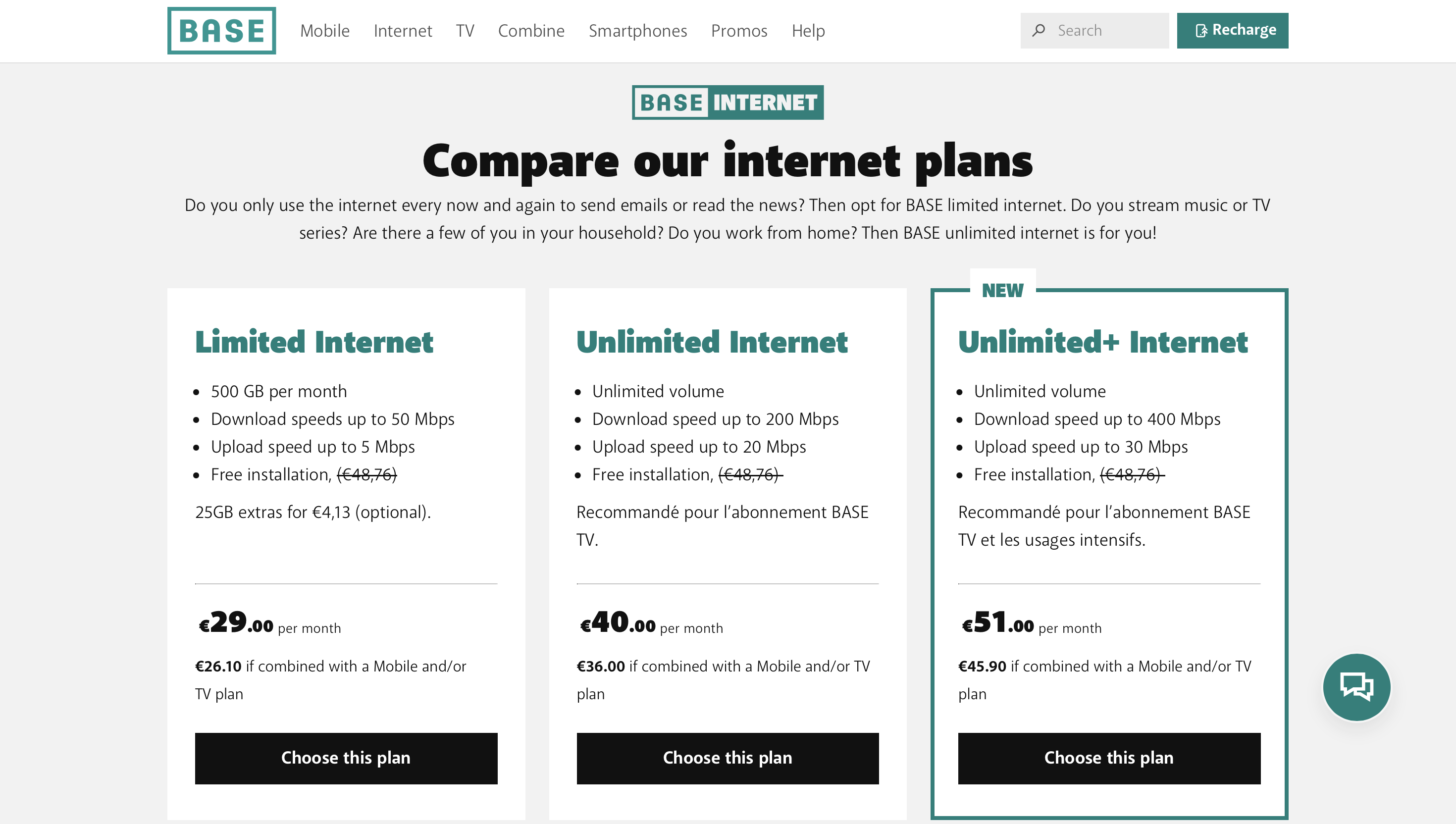
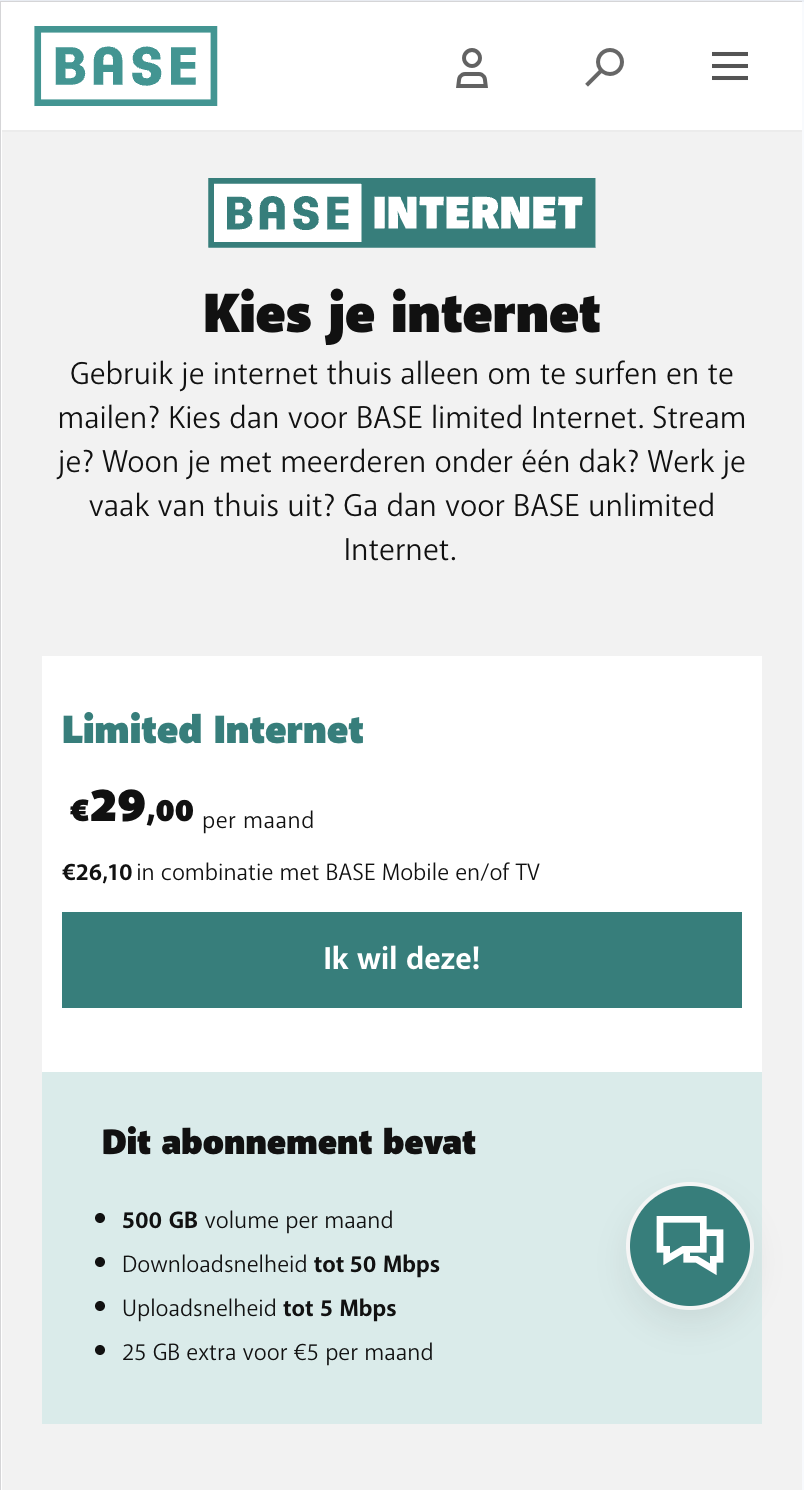
Two new landing pages, one per product. No hero banner — an early A/B test pointed to skipping the hero and putting plan cards directly in view driving up to 32.6% higher click-rate and orders, especially on mobile, where every scroll before the offer costs conversion.
02 — Configurator: 1P+1P+1P with progressive discount reveal
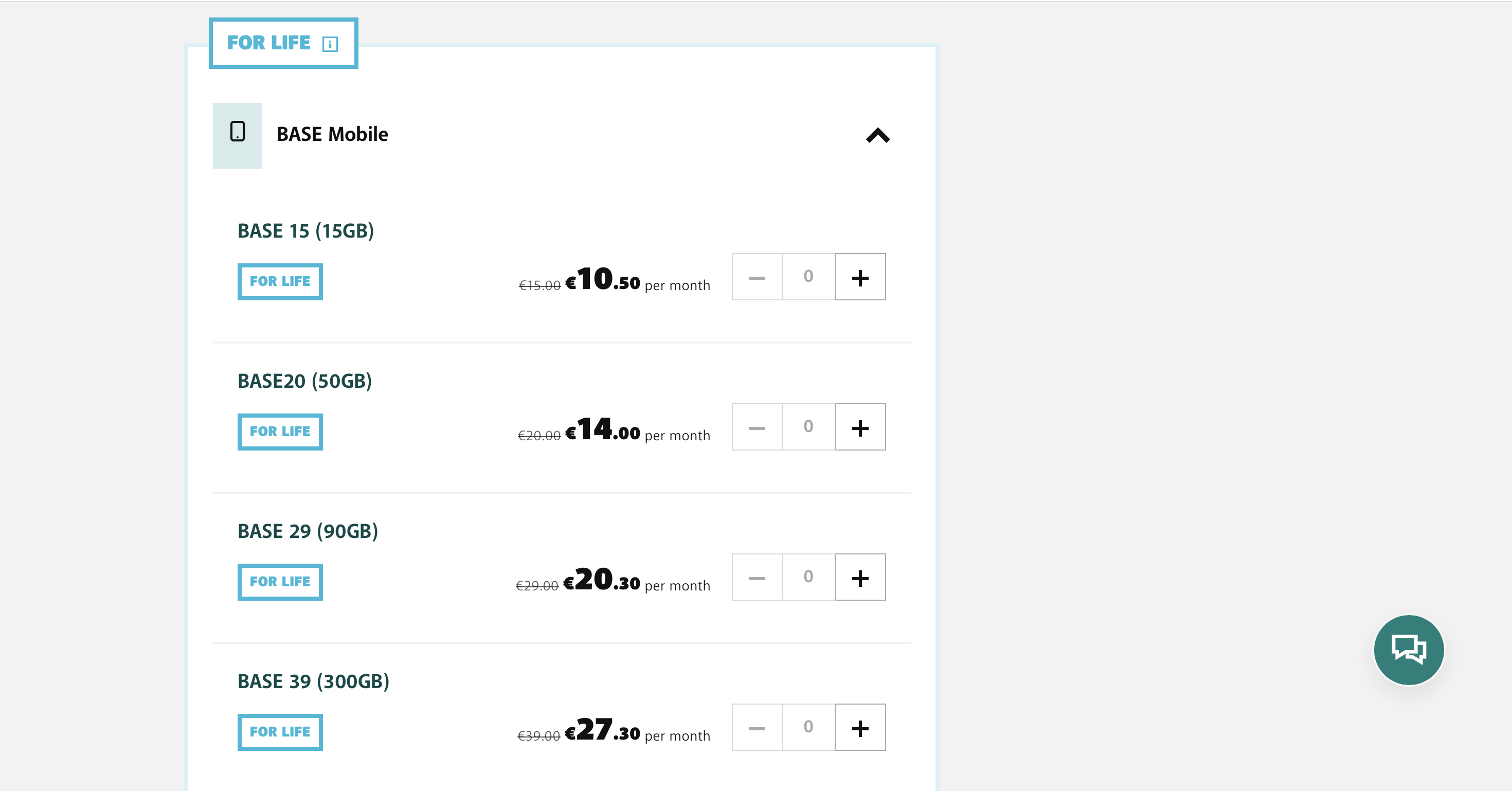
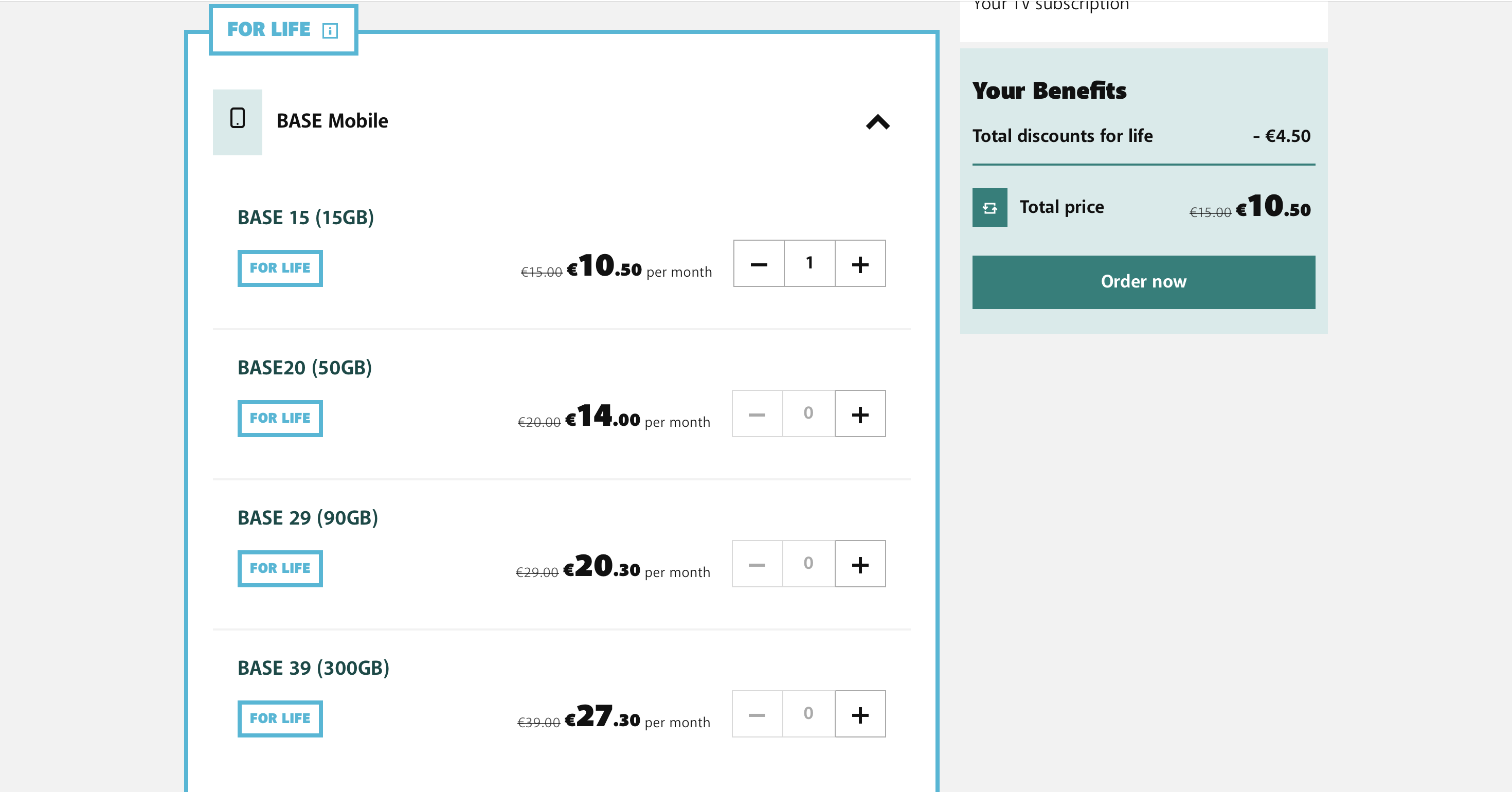
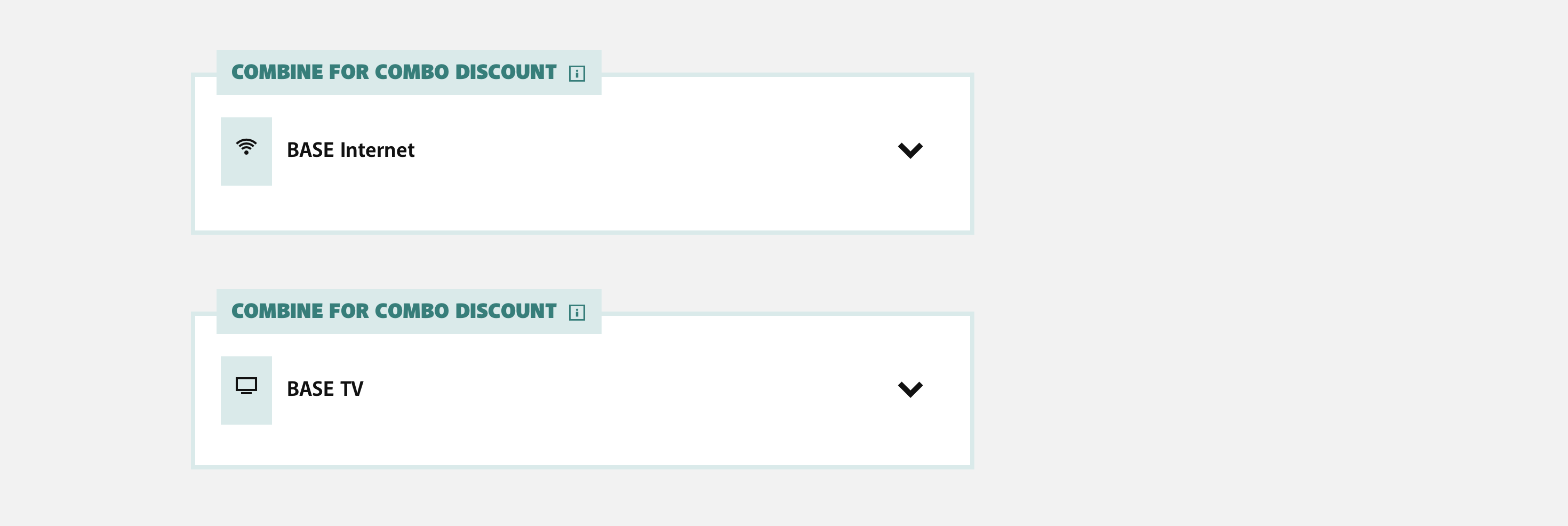
The configurator is built around BASE's 1P+1P+1P model: Mobile, Internet, and TV can each be bought completely independently — no forced bundle. The real design challenge was explaining the discount strategy itself: the Combo Discount only appears once a user pre-selects a second product, so the empty state shows no discount at all. The page had to earn that reveal — hint at the value of combining without giving away the number upfront.
Mobile — empty state · no line selected, no discount shown yet
Mobile — 1P preselected · first line picked, "Your Benefits" panel appears
Internet & TV — empty state · both collapsed, combo discount still hidden
Internet — combo discount unlocked · after 2nd product pre-selected, all three plans show the discounted price
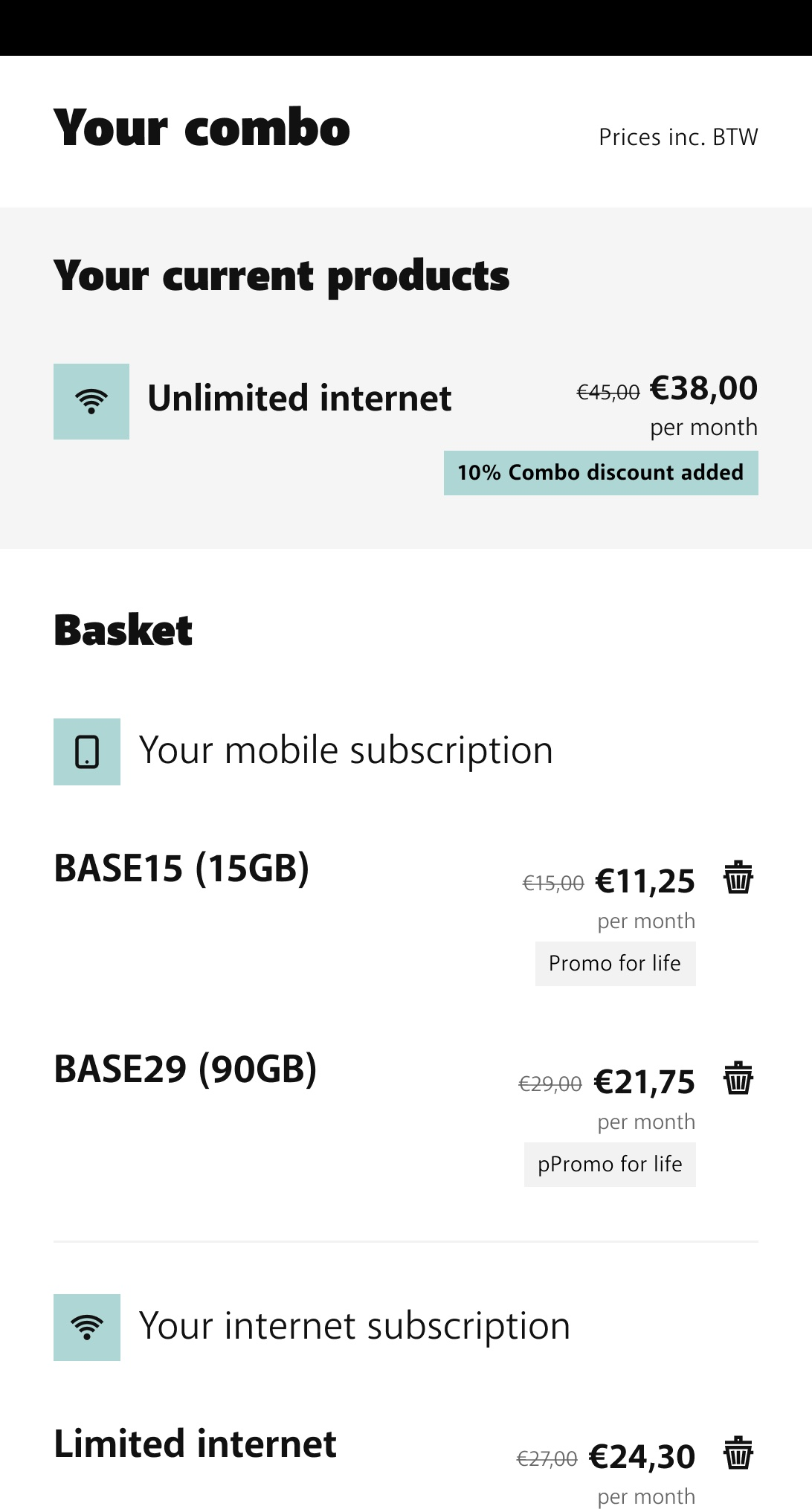
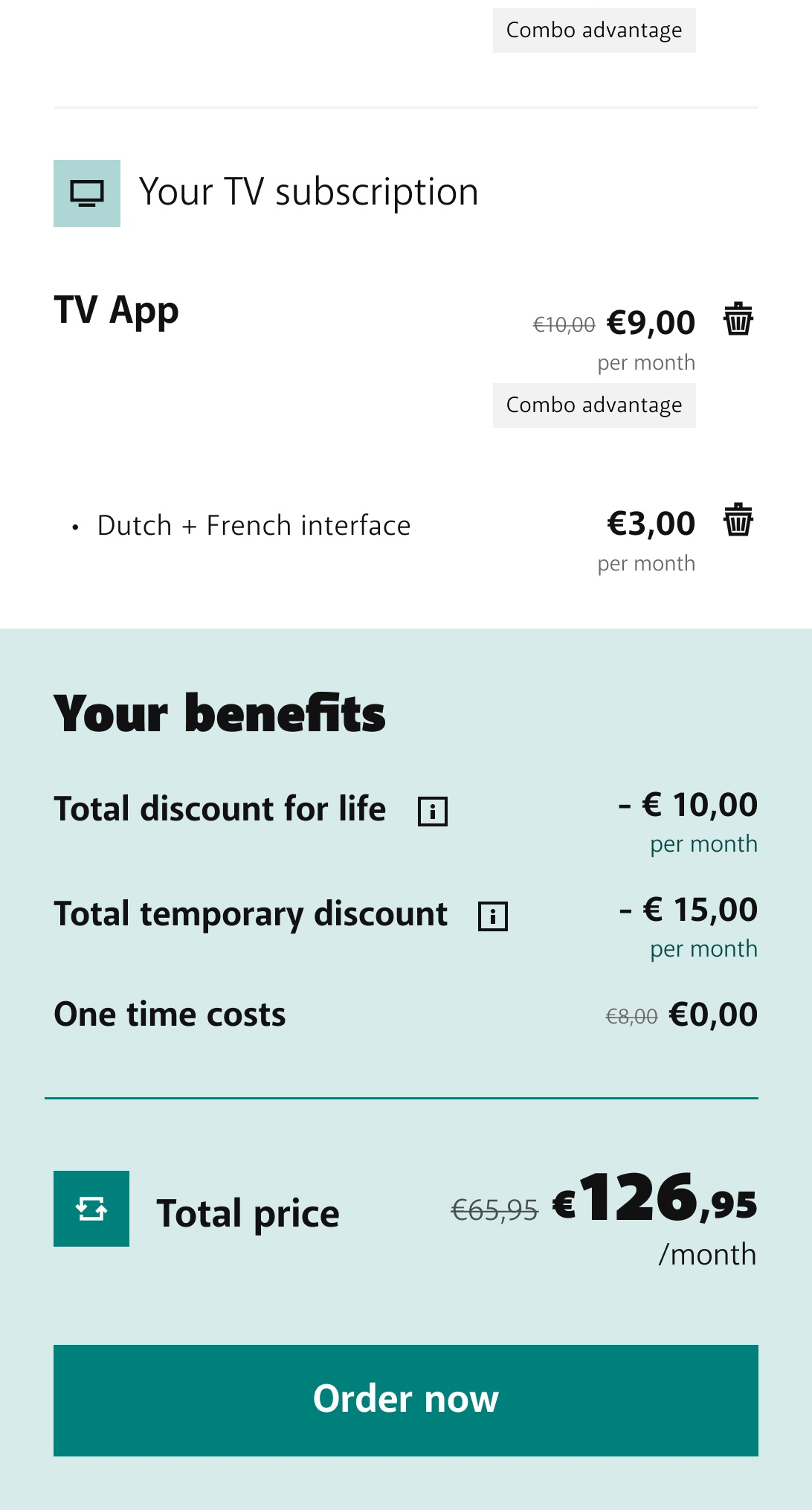
03 — Basket: discount made explicit
The basket carries the same logic through to checkout: each product is listed with its original price struck through next to the discounted "for life" price, and a dedicated "Total discounts for life −€X.XX" line sums up the combo savings before the user commits. Nothing about the discount is left for the user to calculate themselves — it's shown at every step, from the first product they add to the final "Order now."
Business outcome
UX metrics — directly attributable to the experience
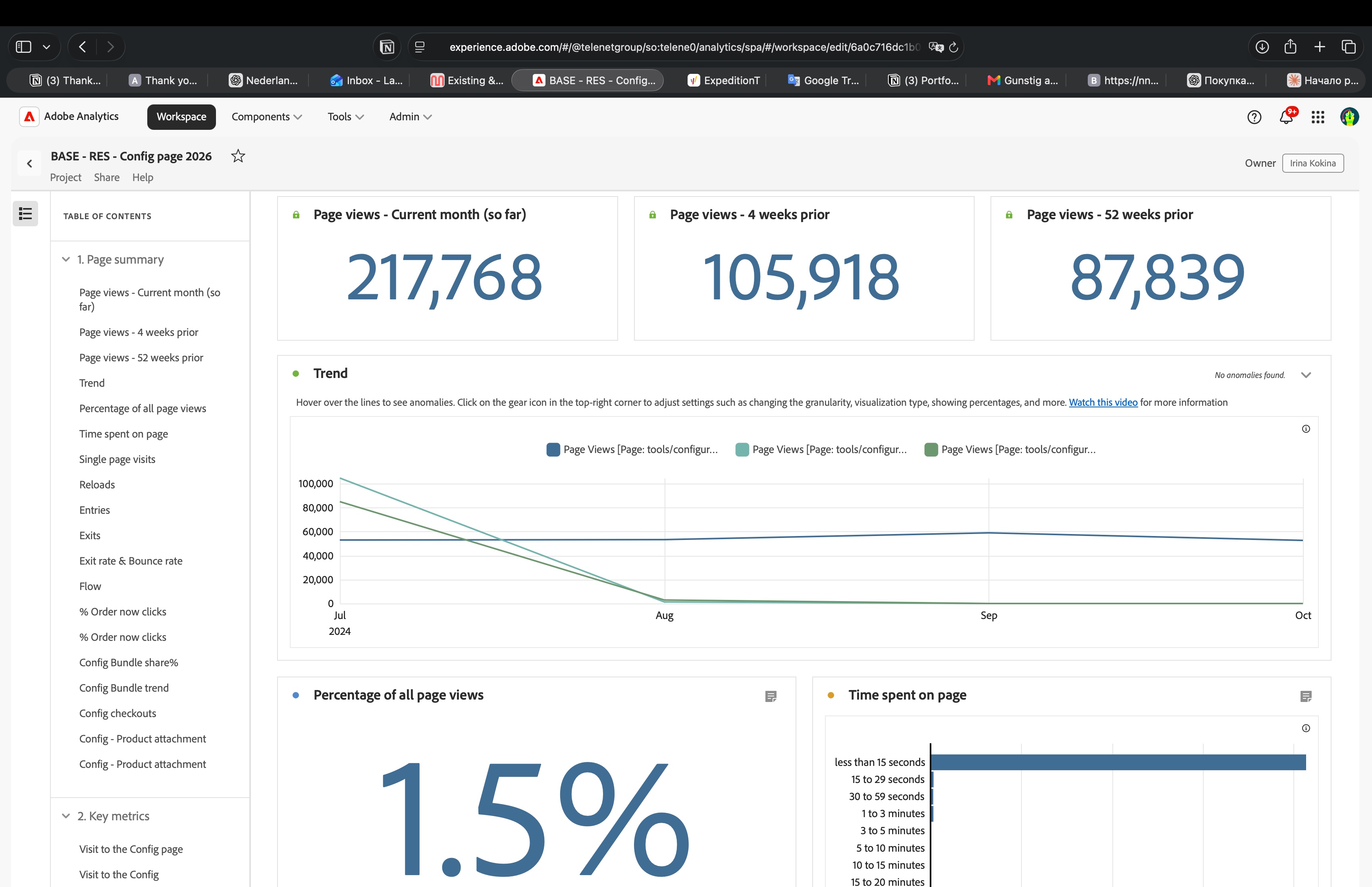
217,768 visits in the current month — up from 87,839 a year prior (+148%). The configurator established itself as a primary entry point for product discovery across the BASE site, representing 1.5% of all page views.
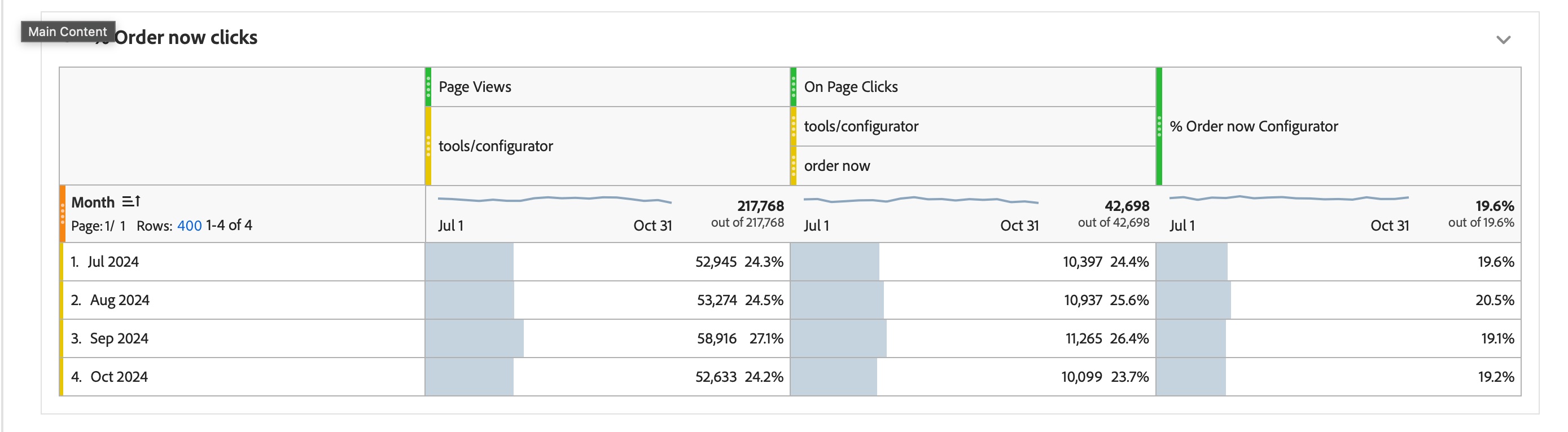
Stable ~20% conversion rate across all four months — 42,698 "Order now" clicks from 217,768 visits. Consistency across months confirms this isn't a launch spike but a sustained product metric.
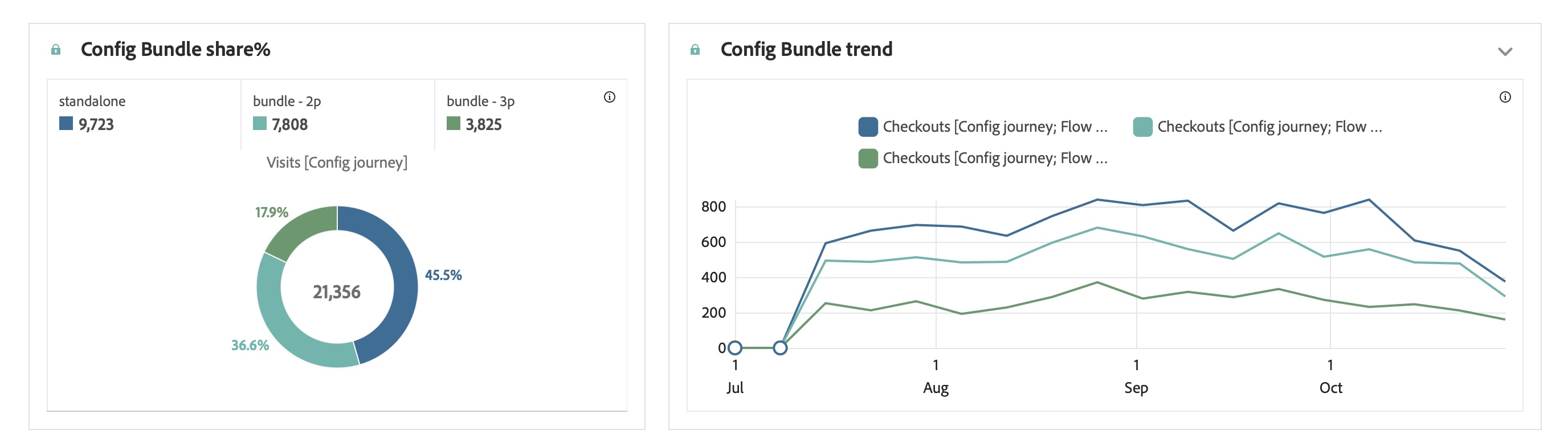
54.5% of users chose a bundle (2 or more products). The promo mechanic — 10% discount for life when combining — drove more than half of all configurator visits toward higher-LTV combinations. Standalone represented only 45.5%.
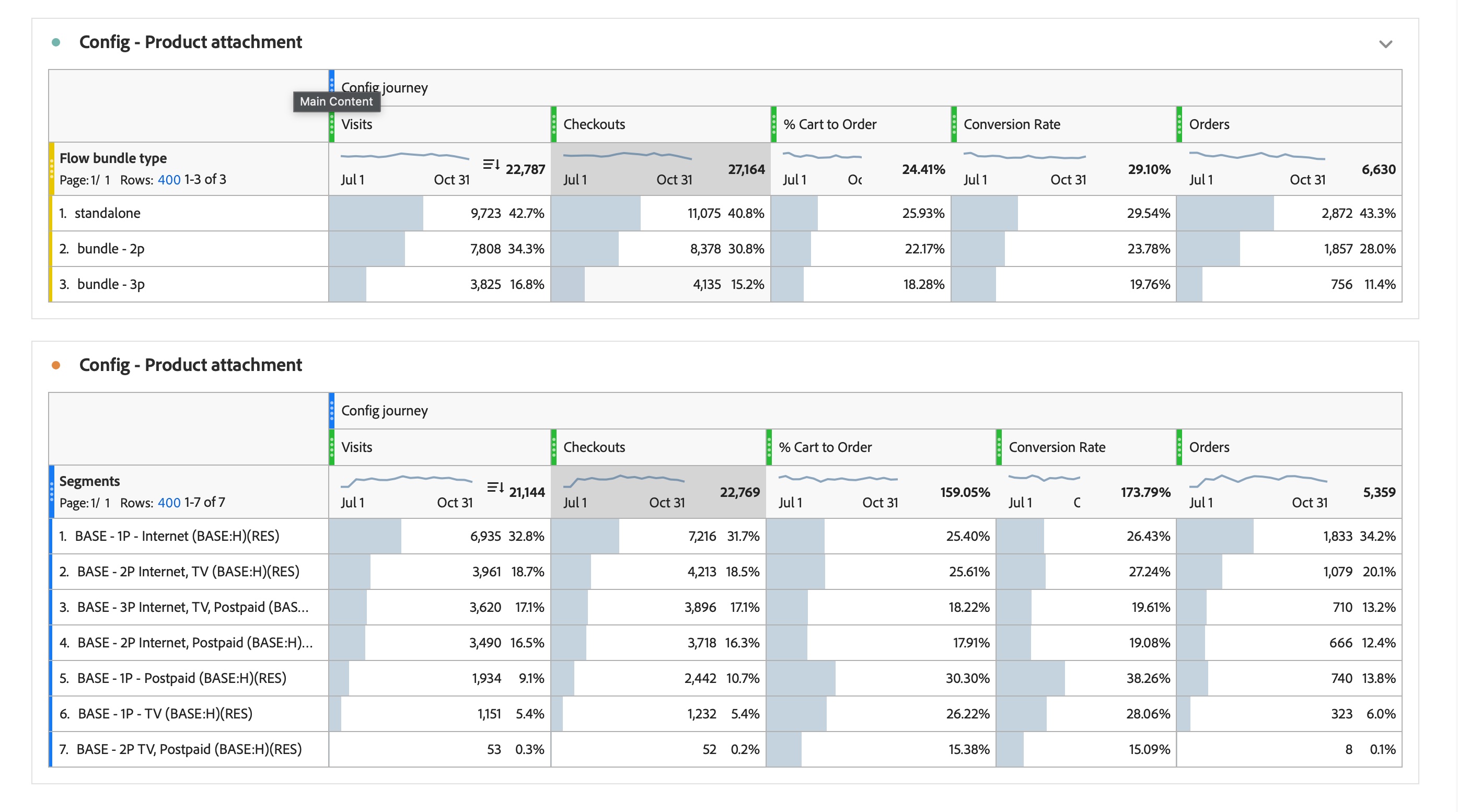
Internet standalone led with 26.43% conversion and 1,833 orders (34.2% of all orders). Bundle 2p and 3p followed. Overall cart-to-order rate: 29.1%. The segment breakdown validated the 5-state account logic — each segment converted differently, confirming personalisation was the right approach.
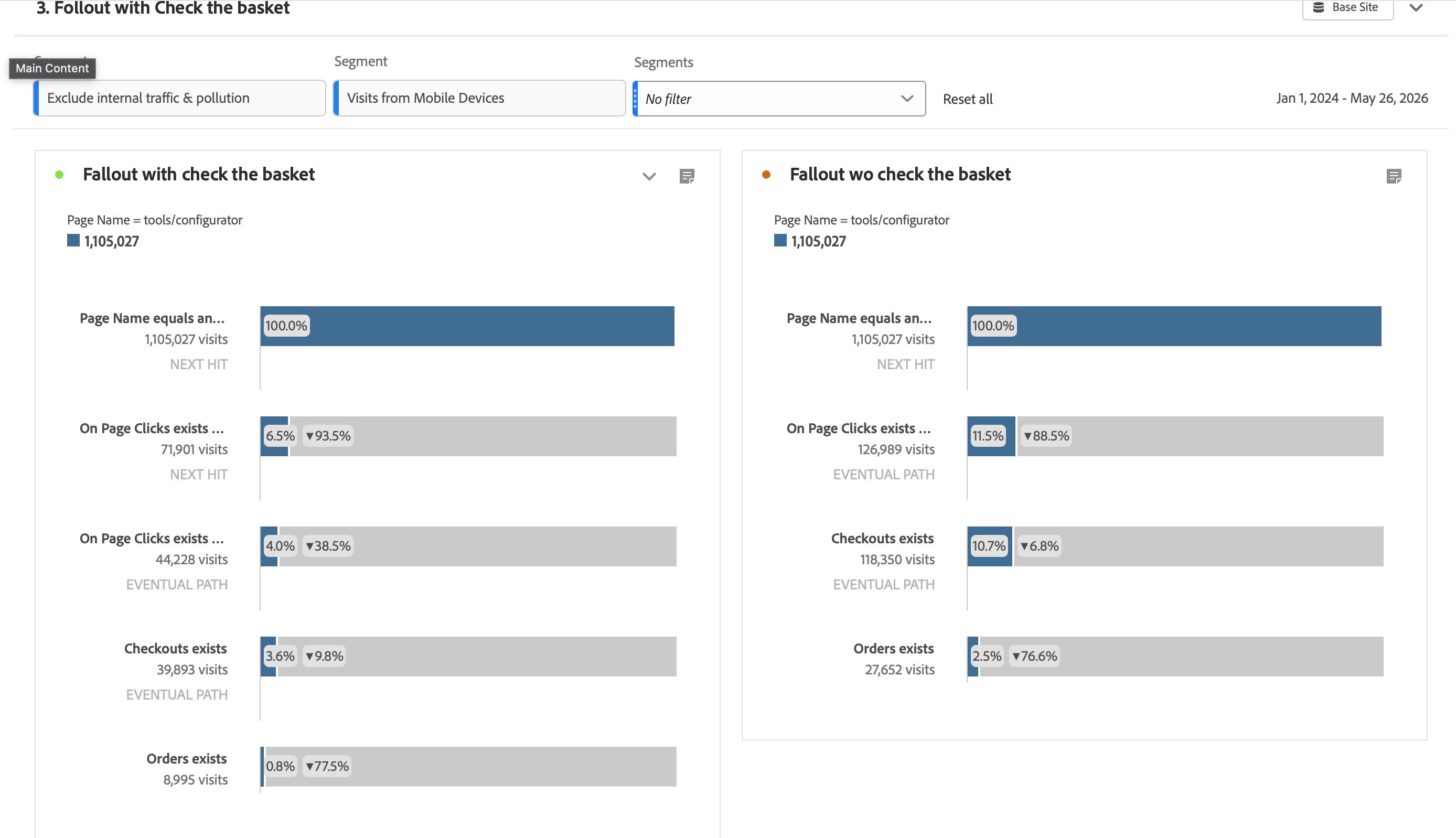
From 1.1M configurator visits: 10.7% reached checkout (118,350), 2.5% completed an order (27,652). The "without basket" path shows 11.5% clicked through directly to checkout — a faster path for returning or high-intent users built intentionally into the logged-in flow.
Qualitative
Post-launch interviews confirmed brand perception shift — users now associating BASE with internet. The trust problem we designed for had been solved.
What I learned
Start with development constraints before designing — understanding technical limitations early prevents rework late. And divide usability testing into small, focused tests rather than trying to cover all flows at once. Targeted tests surface sharper insights and are easier to act on.
What I'd do differently
Start accessibility audit earlier. Legal constraints late in the project caused rework on several components — earlier involvement would have prevented that.
Business impact
BASE transformed from a single-product mobile operator into a multi-product provider. Every Internet or TV subscriber is now a cross-sell-ready customer with higher LTV.